

Maputo, Mozambique
Isaura Matola (pictured above), a widow and mother of four, wakes up every day at 5 a.m., before sunrise, to begin collecting recyclable waste at the Hulene landfill on the outskirts of Maputo, Mozambique’s capital.
After losing her job as a domestic worker in 2023, Matola faced unsuccessful attempts to secure other employment. Waste sorting at the landfill became her only viable option.
“With what I earn here, even though it is not much, I manage the basics to live. It’s different from doing nothing,” she says, while separating plastic, paper, and metal from large piles of rubbish. “At least my children are able to go to school.”
With her income, the 47-year-old keeps all four children in school—one studying business management at university—and has managed to renovate her type-two house in the Maxaquene neighbourhood, several kilometres from the dumpsite.
“I hope God gives me the strength to keep working until my children graduate, because without me, there is no one else to support them,” Matola says. “That is why what many people see as rubbish is gold to us, because it puts bread on the table.”
Matola is one of more than 100 women in Real Reciclagem, a cooperative founded in 2022 to help women recover from the economic impact of the Covid-19 pandemic. The cooperative, officially registered in 2023, also provides a support network for widows, single mothers, and women who are survivors of violence.
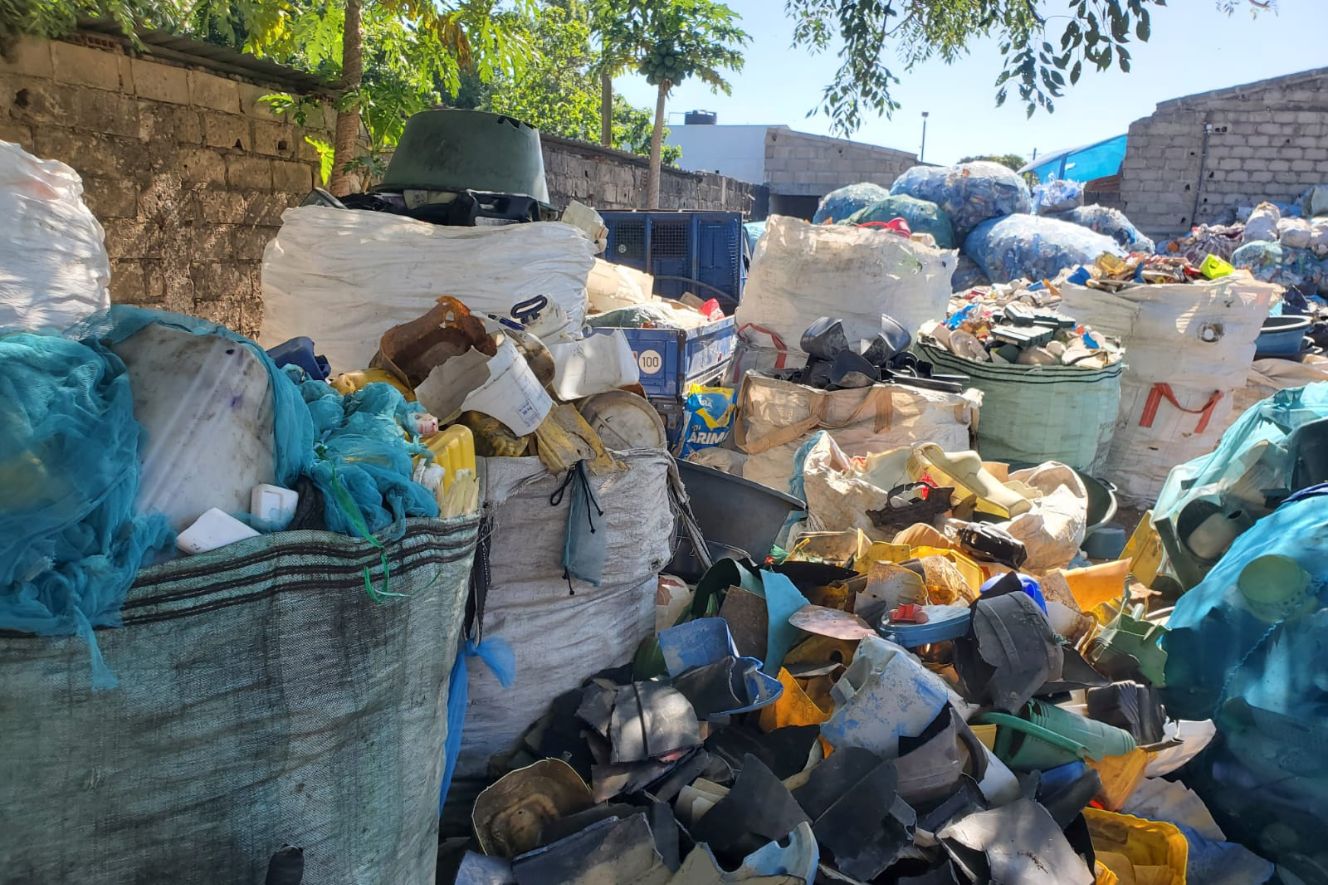
The place where the cooperative’s waste storage facility operates in Maputo, Mozambique. By Samuel Come
520 tonnes collected, 186 children in school
Real Reciclagem reached a significant milestone in December 2024, having collected more than 520 tonnes of recyclable materials from dumpsites, streets, and avenues since its creation. This has helped reduce waste that would otherwise clog roads, drainage channels, and informal settlements around the city.
Women in the cooperative earn between $100 and $150 monthly—modest amounts that keep 186 children in school and ensure minimally dignified lives, explained Yolanda Jorge, 39, the cooperative’s founder.
“We are not here just to separate plastic. We are creating a new way of living—one that restores our autonomy, supports our families, and shows that the economy can be built on collaboration and mutual care,” Jorge said.
The cooperative mainly collects metal, plastic, plastic-based materials, and cardboard by hand, averaging 18 to 21 tonnes each month. This comes as the municipality of Maputo produces between 1,200 and 1,400 tonnes of waste daily.
According to Jorge, the type of waste available varies over time, but buyers exist for all materials. “At the moment, for example, we have more cardboard