

Category: Feeds
-
Understanding Altruism of Nonprofit Workers: The Roles of Motivation Types
Nonprofit and Voluntary Sector Quarterly, Ahead of Print. This paper studies the impact of motivation types on altruism levels among the nonprofit organization (NPO) workforces in Turkey. To measure altruism, we used a probabilistic dictator game with real stakes. In a sample of 228 NPO workers, 73% opted to donate an average of 50 out…
-
December 2023 updates
Every month we send an email newsletter to our supporters sharing recent updates from our work. We publish selected portions of the newsletter on our blog to make this news more accessible to people who visit our website. For key updates from the latest installment, please see below! If you’d like to receive the complete…
-
GiveWell from A to Z
To celebrate the end of 2023, we’re highlighting a few key things to know about GiveWell—from A to Z. These aren’t necessarily the 26 most important parts of our work (e.g., we could include only “transparency” or “top charities” for T) but they do fit the alphabet, and we’ve linked to other pages where you…
-
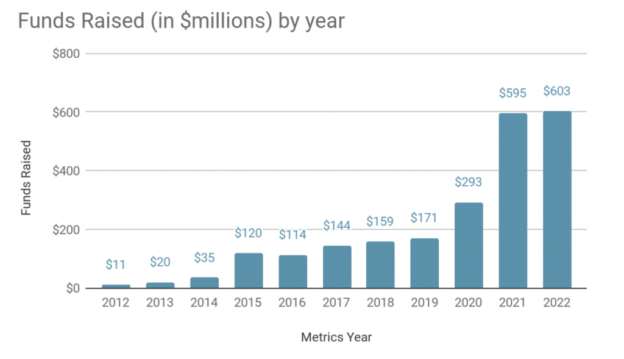
GiveWell’s 2022 metrics report
In 2022, the most recent year for which data is available and analyzed, GiveWell raised the largest amount of money in our history, over $600 million. We thank our donors for continuing to trust us to find and recommend highly cost-effective giving opportunities. The following table summarizes our funds raised and our funds directed to…
-
Staff members’ personal donations for giving season 2023
For this post, a number of GiveWell staff members volunteered to share the thinking behind their personal donations for the year. We’ve published similar posts in previous years.1See our staff giving posts from 2022, 2021, 2020, 2019, 2018, 2017, 2016, 2015, 2014, and 2013. jQuery(‘#footnote_plugin_tooltip_14589_1_1’).tooltip({ tip: ‘#footnote_plugin_tooltip_text_14589_1_1’, tipClass: ‘footnote_tooltip’, effect: ‘fade’, predelay: 0, fadeInSpeed: 200,…
-
December 2023 open thread
Our goal with hosting quarterly open threads is to give blog readers an opportunity to publicly raise comments or questions about GiveWell or related topics (in the comments section below). As always, you’re also welcome to email us at info@givewell.org or to request a call with GiveWell staff if you have feedback or questions you’d…
-
Microfoundations of Dynamic Capabilities for Social Innovations in Small Non-Profit Organizations
Nonprofit and Voluntary Sector Quarterly, Ahead of Print. The promotion of social innovations by non-profit and business organizations has gained increasing interest. Yet, there has been limited research on routines that organizations use to facilitate social innovations. This paper uses a dynamic capabilities framework to understand the microfoundations of dynamic capabilities for social innovation in…
-
How we work, #3: Our analyses involve judgment calls
This post is the third in a multi-part series, covering how GiveWell works and what we fund. Through these posts, we hope to give a better understanding of our research and decision-making. How we work, #1: Cost-effectiveness is generally the most important factor in our recommendations How we work, #2: We look at specific opportunities,…
-
Behind the Crowdsourcing Platform: Assessing Volunteer Recruitment and Engagement Instruments
Nonprofit and Voluntary Sector Quarterly, Ahead of Print. Involving volunteers to perform tasks through crowdsourcing projects is gaining popularity. However, attracting volunteers and keeping them engaged throughout a project sets great challenges to project managers. This article analyzes the effectiveness of recruiting and engagement instruments on volunteers’ activity. A mixed-method approach has been used, including…